
Alcolea between the Sierra Nevada and Sierra de Gádor
Accommodation in Alcolea
Landscape and hiking
Alcolea lies in a narrow mountain valley among the mountain ranges formed by the Sierra Nevada and the Sierra de Gádor; the Río Alcolea flows through the valley. The town is structured around the Río Alcolea, a Mediterranean mountain river. The municipal visitor route identifies Las Hortichuelas as a natural area and recreational zone through which the Río Alcolea flows.
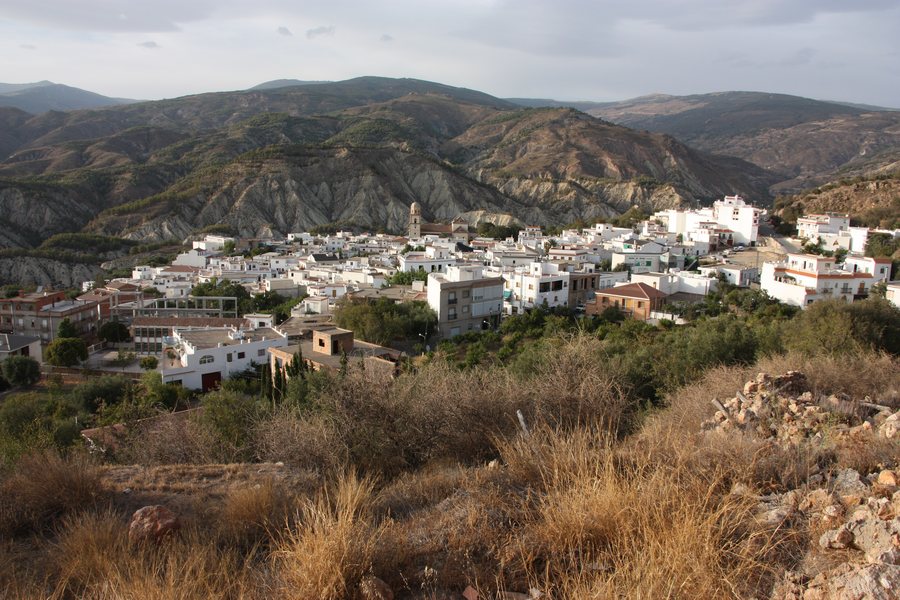
At the edge of Alcolea, in the direction of Laujar, the PR-A 297 “El Castillejo” hiking trail begins. The trail is 9 kilometres long, has a low to moderate difficulty level and runs along dirt roads and hiking paths. It crosses the Sierra de Gádor, passing olive groves and small, typically Mediterranean river meadows.
In Sierra Nevada National Park, the Sendero Alcolea–Guarros circular hiking trail covers 13.8 kilometres and has a moderate difficulty level. The PR-A 296 “Los Pradillos” linear hiking trail begins near Alcolea, in the Aljibe del Arco area. It is 12 kilometres long, has been officially certified and signposted since 2006, and can be walked. Its route passes through a replanted pine forest and offers views of the Sierra Nevada, villages in the Granada Alpujarra and, in the distance, the Mediterranean Sea. The same hiking trail leads to the abandoned mining settlement of Los Pajarillos.
The Ruta de los Olivos Centenarios is considered an 8.5-kilometre circular route with a low difficulty level. The XIII Ruta de Olivos Centenarios was scheduled to take place in Alcolea on Sunday, 30 November 2025; guided visits to the centuries-old olive trees and the olive mills of Alcolea were planned.
History and townscape
El Castillejo preserves the remains of a tower and part of a larger fortified complex, which has been protected as a Bien de Interés Cultural since 1985. The Mudéjar chapel Ermita de San Sebastián y San Ildefonso is located near Alcolea on the old road to Ugíjar; it was built from 1702 to 1709, and its small bell tower dates from 1720.
In Alcolea, visitors can stroll through the townscape shaped by Hispano-Muslim influences. A church was built there in the mid-16th century on the site of an older mosque. Traditional handicrafts in Alcolea include processing esparto grass into sewing baskets, bread baskets and cenachos.
The Fuente Lavadero Escalonado is a traditional fountain with a rectangular basin and two water outlets in the immediate vicinity of Alcolea’s public washhouse. For generations, local residents used it to obtain drinking water and for washing. Today, the Fuente Lavadero Escalonado is a freely accessible outdoor site that visitors can visit.
Cuisine and festivals
Alcolea’s traditional cuisine uses local olive oil and traditionally produced wines. Pan de aceite is also baked in the local wood-fired ovens using olive wood.
The San Sebastián celebrations include a traditional Chisco with a bonfire, during which the municipality distributes filled sandwiches and drinks and the municipal band plays pasodobles and other pieces. The same celebrations include a procession through the streets of Alcolea, ending in the church square with a fireworks display.
The carnival event begins with the “Buñuelá”, during which local women distribute buñuelos, coffee and chocolate. During the “Entierro de la Zorra”, a funeral procession passes through the streets of Alcolea and ends back at the Centro Cultural Zaharagüí.
More destinations
Find more linked destinations here: Vicar, Bedar, La Breña, Lucainena De Las Torres, La Cañada, Olula Del Río, Pechina, Tabernas
To the higher-level travel overview: Almeria.

