
Suflí: Church, Spring and Gypsum History
Accommodation in Suflí
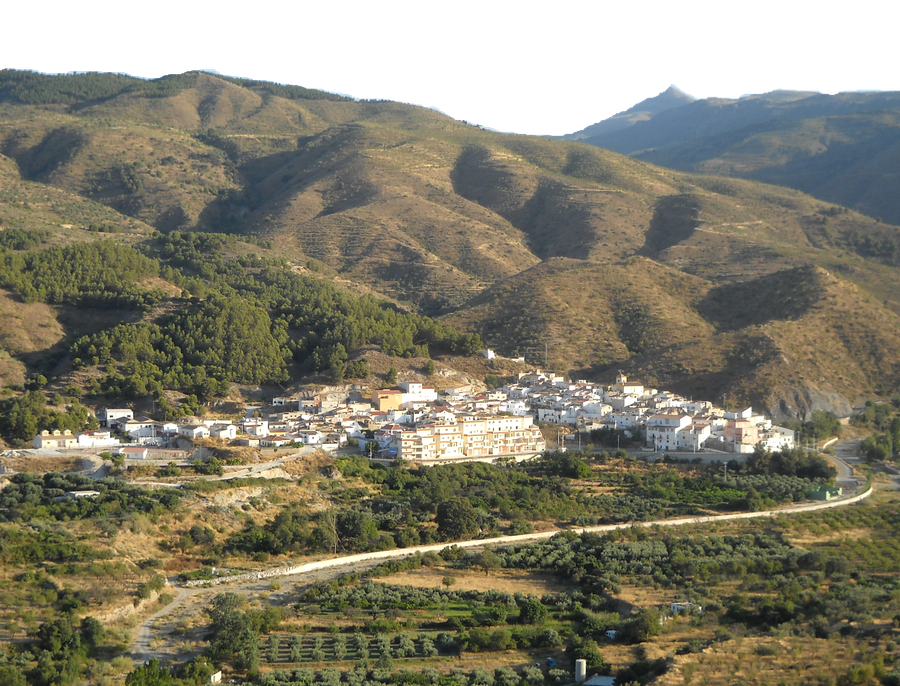
Suflí is home to the parish church of Nuestra Señora del Rosario, a place of worship dating from the 18th century.
Culture
The parish church has a wooden coffered ceiling and contains an altarpiece by Jesús de Perceval. The Ermita de la Cruz is also part of the town’s architectural history and furnishings.
The Ermita de la Cruz has a square floor plan, a pyramidal tiled roof with five roof finials and a portal with a semicircular arch. On 3 May, the Día de la Cruz is celebrated there. The celebration includes hojuelas, hot chocolate and traditional children’s games.
The church and the Ermita display different historical accents: here, the coffered ceiling and altarpiece shape the interior, while there, the floor plan, roof and portal determine the exterior appearance. The feast day on 3 May adds a recurring annual local tradition to these architectural features.
Spring and Trails
The Fuente de los Caños de Suflí is a monumental spring dating from the late 19th century. It is located opposite the town on the left bank of the Boloyunta River in the La Zanja area.
The spring is made in the Baroque style from white marble from Macael. Its features include three iron spouts.
The Sendero de las Yeseras de Suflí, designated SL-A 027, begins at the Fuente de los Caños. From this starting point, the trail leads to Andalusian gypsum quarries and gypsum kilns dating from the 15th century.
There is a municipal recreation area at the Fuente de los Caños. It includes gardens, tables, barbecue facilities and stone seating areas.
The spring thus connects a named historic structure with a location on the left bank of the river and a starting point for the Sendero de las Yeseras. Further along the trail, the gypsum quarries and gypsum kilns dating from the 15th century take centre stage. The official Laroya–Gérgal cycling stage also passes through Suflí via the AL-6101.
Local Tradition
Fritada de Suflí is a traditional homemade preserve made from peppers and tomatoes. It is also used as a pepper and tomato sofrito for meat dishes.
The Fiesta de la Fritada takes place in July. It has been held since 1992.
Fritada has two uses: it appears as a homemade preserve and as a sofrito for meat dishes. The Fiesta de la Fritada brings this local speciality together as a festival of its own in July; the celebration has been held since 1992.
Gypsum and Oil
The Centro de Interpretación del Yeso in Suflí presents the historical importance of gypsum as a frequently used material in traditional architecture. The centre is located in a restored old olive oil mill. There, you can see the milling and pressing of olives to produce oil.
The Centro de Interpretación del Yeso is usually closed. To visit, you must request a tour from the Ayuntamiento. The free audio guide explains the oil-making process in six steps.
The six steps in the free audio guide make the oil-making process understandable as a sequence. Together with the milling and pressing of the olives, they also make the former use of the restored olive oil mill visible as a concrete part of the centre.
For your stay in Suflí, you can search for a hotel; further planning can then follow your own preferences.
For the overarching travel overview: Almeria.
More destinations
More places within the same destination:

