
Moraleda de Zafayona: History, Routes and Festivals
Accommodation in Moraleda De Zafayona
In Moraleda de Zafayona, continuous settlement of Cerro de la Mora spans from the 15th century BC to the 2nd or 3rd century AD; afterwards, the site was used sporadically as a burial and settlement site until the Middle Ages.
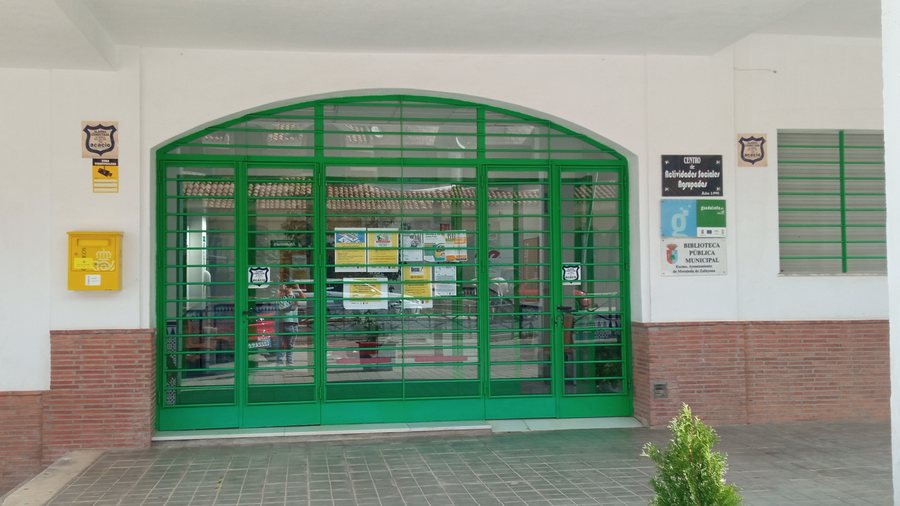 File:Moraleda de Zafayona - Biblioteca Pública Municipal.jpg
Photo: Peejayem via Wikimedia Commons, CC BY-SA 4.0
File:Moraleda de Zafayona - Biblioteca Pública Municipal.jpg
Photo: Peejayem via Wikimedia Commons, CC BY-SA 4.0
History
The Cerro de la Mora archaeological site is protected as a Bien de Interés Cultural in the category of an archaeological zone.
In the historic centre of Moraleda de Zafayona stands the parish church of Nuestra Señora de las Angustias; it is the municipality’s most important religious monument. The first construction phase of the simple building with two naves dates from the 19th century.
El Caño is a historic site near the church in Moraleda de Zafayona. It preserves the fountain with three spouts, part of the wall that once enclosed the spring, and sections of the former animal troughs.
The bridge over the Río Cacín was completed in 1933.
Routes
From the square at El Caño, there are views of the Río Cacín depression and extensive olive groves.
The Ruta de Washington Irving reaches Moraleda de Zafayona after an eight-kilometre stretch on the A-92 motorway and stops there for a visit to Cerro de la Mora.
The section of the Ruta de Washington Irving near Moraleda de Zafayona follows a paved road with views of the Río Genil.
The Ruta de los Yacimientos can be walked and leads to Cerro de la Mora. The Ruta de las Cuevas provides insights into Moraleda de Zafayona’s former cave district. On the Ruta de Zafayona, water serves as the thematic guide.
Festivals
The Fiestas Patronales de la Virgen de las Angustias originally developed from a livestock market. They include festival tents and dances and last for three days. They take place on the weekend closest to the 21st.
Candelaria is celebrated on 2 February with bonfires and dancing around the fires. On this occasion, Moraleda de Zafayona traditionally serves streaky bacon, savoury bread rings with fresh broad beans, and wine.
The Romería de San Marcos is celebrated on 25 April in the surrounding area or countryside. Its traditions include a round bread roll baked around a boiled chicken egg; afterwards, the eggs are playfully thrown at friends and relatives.
The Fiestas de Agosto take place on the first weekend of August. Until around two decades ago, they were held in September under the name La Función; in this earlier form, they included a religious ceremony and a procession in honour of the Virgen de las Angustias.
Events
On 23 and 24 May 2026, the Centro Apícola Moraleda will host a practical beekeeping course on bees, colonies and hive products.
The course includes a honey tasting with theoretical and practical sensory analysis, as well as hive inspections. Protective clothing and the necessary equipment will be provided for the exercises.
More local pages: La Mamola, Láchar, Cúllar, Algarinejo, Salobreña, Dílar, Freila, Víznar
For the main travel overview: Granada.

