
Cuevas Del Almanzora – Castles, Museums and Coast
Accommodation in Cuevas Del Almanzora
Culture and History
The Museo de Arte Contemporáneo A.M.C. is located in the Castillo del Marqués de los Vélez. The palace within the castle was built between 1517 and 1520 and combines a military fortress with an aristocratic residence. The Castillo del Marqués de Los Vélez, also known as the Castillo de Cuevas del Almanzora, was built as a fortified complex after the Christian conquest of the Kingdom of Granada.
 File:Museo Arqueológico Municipal de Cuevas del Almanzora 010.jpg
Photo: Ismael Olea via Wikimedia Commons, CC BY 4.0
File:Museo Arqueológico Municipal de Cuevas del Almanzora 010.jpg
Photo: Ismael Olea via Wikimedia Commons, CC BY 4.0
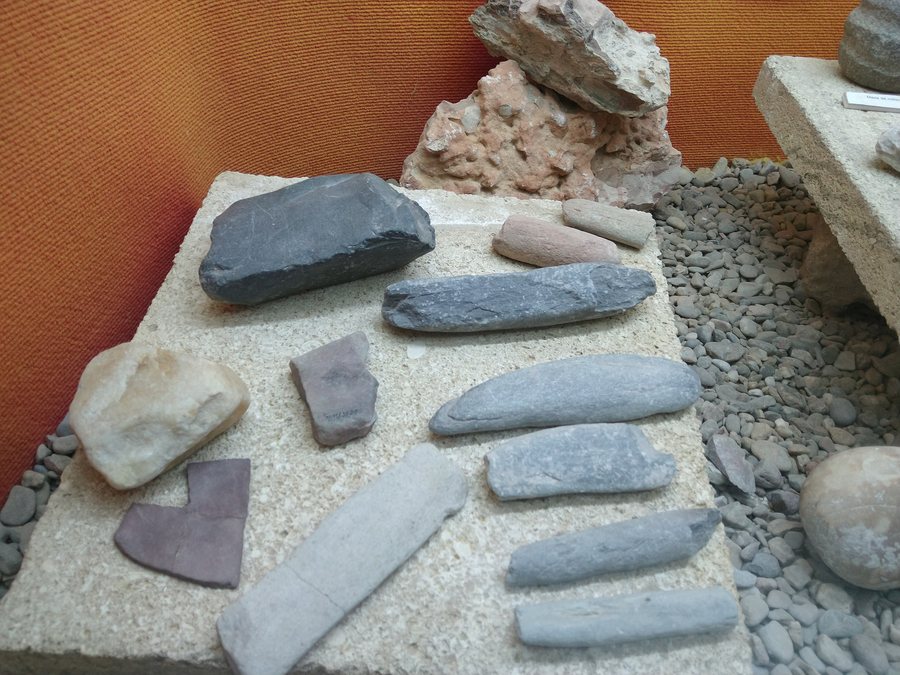
The Museo de Arte Contemporáneo Antonio Manuel Campoy contains more than 600 paintings, drawings, prints and sculptures, including works by Pablo Ruiz Picasso, Jesús de Perceval, Pedro Bueno, Tapies and Joan Miró. The Museo Arqueológico de Cuevas del Almanzora displays finds and materials from archaeological sites in the municipality, with a particular focus on the Bronze Age, the Argaric culture, Baria and the Phoenician-Roman period. The Museo Arqueológico also offers guided tours with commentary, adapted to all visitor groups.
The Cueva Museo presents the way of life of cave dwellers up to the mid-20th century as an ethnographic interpretation of the local cultural heritage, and displays important everyday objects and work tools. The Iglesia de Nuestra Señora de la Encarnación is protected as a historic-artistic monument and as a BIC; it was built in the 16th century on the site of a former Arab mosque.
The Argaric settlement of Fuente Álamo dates from approximately 2200 to 1600 BC and was classified in 1996 as a Cultural Asset of Special Interest, Bien de Interés Cultural, in the category of Archaeological Zone. Holy Week in Cuevas del Almanzora was declared a Festival of Tourist Interest in Andalusia in 2003 and includes the traditional live performance La Judea.
More destinations
Related destination: Pozo Del Esparto.
More destinations: Láujar De Andarax, Nijar, La Envía, Vera, Lucainena De Las Torres, Tonosa and Llano de Los Olleres.
Trails and Coast
The Ruta de los Reforestadores is an officially certified tourist hiking trail with a length of 12 kilometres, a stated duration of 150 minutes and a low level of difficulty. Along the coast of Villaricos, a coastal path leads to the remains of the Fundiciones de la Costa de Villaricos, including ore-washing facilities, warehouses, furnaces, chimneys, small viaducts, hoppers, landing stages and a chapel.
Playazo Villaricos is a sandy and rocky beach with dark rocks that point to the area’s mining past. It is located next to the castle, offers easy access for people with disabilities and parking, and has been awarded the Blue Flag.
The Castillo de Villaricos, also known as Torre de Cristal, was acquired by the municipality of Cuevas del Almanzora in the early 1990s and subsequently renovated as a tourist information office and exhibition hall.
Water and Marine Environment
At the Cuevas del Almanzora reservoir, Lunar Cable Park offers water sports such as wakeboarding, kayaking and AquaGlide; it is also home to the only cable-ski facility in the province of Almería.
Activities from Villaricos lead to underwater areas with seagrass meadows, extensive areas of orange coral, sea anemones and various types of algae. In the Phoenician necropolis of Villaricos, visitors can see five of the 15 hypogea still preserved in Spain; these are tombs of wealthy families carved into the rock.
Architecture
The Palacete de Don Torcuato Soler Bolea is considered an outstanding example of 19th-century bourgeois residential architecture and comprises three storeys. Notable features include the columns at the main entrance, the woven grilles on the window openings on the first upper floor and the continuous balcony on the second upper floor.
To the main travel overview: Almeria.

