
El Rocío between Pilgrimage, Marshland and Doñana
Accommodation in El Rocío
El Rocío’s distinctive character is clearly visible in its townscape: the Ermita de la Virgen del Rocío is surrounded by small white houses in El Rocío. The Sanctuary of El Rocío has a basilica-style layout with three naves, a transept and a main chapel. Rural architecture and clearly structured ecclesiastical design thus come together in one destination.
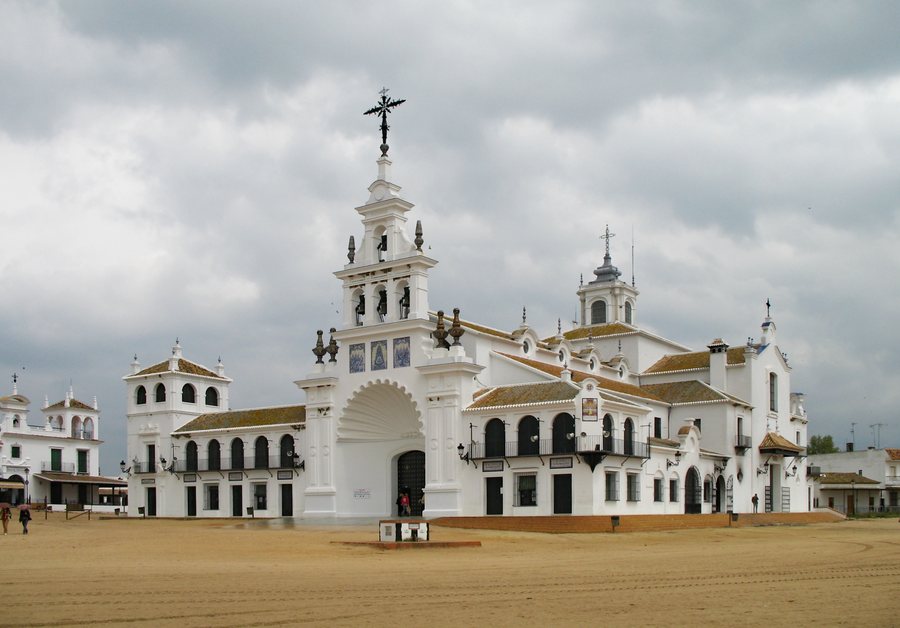
Sanctuary and Religious History
The religious and art-historical dimension reaches far back. The image of the Virgin of El Rocío appears to have been created in the Gothic style at the end of the 13th century and was substantially altered in the 17th century. Construction work on the Santuario y Aldea de El Rocío took place from 1964 to 1969. The Centro de Interpretación de El Rocío presents the history, culture and traditions of the settlement. The Museo Tesoro de la Virgen del Rocío preserves and displays historical and art-historical elements of the cultural heritage of this centuries-old religious institution. Pilgrimages can be organised in connection with the sanctuary.
Romería del Rocío and Pilgrimage Routes
The Romería del Rocío takes place in the days leading up to Pentecost; its date therefore varies and falls between May and June. During the Romería, pilgrims traditionally reach the settlement on foot and by cart. At the marshland viewpoint on the Paseo Marismeño, there is also a life-size depiction of a tamborilero, an indispensable figure in the Romería del Rocío.
Marshland, Forest and Birdwatching
The Paseo Marismeño runs through marshland near the sanctuary. Horses and foals can be observed there throughout the year, along with wetland birds such as spoonbills, flamingos, glossy ibises and herons. This route thus combines a landscape feature with a visible reminder of the pilgrimage.
The Acebuches de El Rocío offer another natural perspective, preserving a remnant of the original Mediterranean forest. The Doñana National Park begins at the Acebuches. The Acebuche El Abuelo is estimated to be more than 600 years old. In spring and summer, storks, herons and swallows, among others, arrive from Africa along the Sendero Charco de la Boca.
Routes on Different Scales
The Ruta del traslado is a 15-kilometre route between the pilgrimage chapel of El Rocío and the parish church of Nuestra Señora de la Asunción in Almonte. The Camino del Rocío a Santiago de Compostela begins at the Santuario de la Virgen del Rocío. It is 211 kilometres long and follows routes offering great natural and monumental diversity. The different route lengths provide two scales for planning stages.
El Rocío can be reached via a route that runs along the Doñana National Park. This makes it possible to combine sacred sites, cultural and historical collections, routes and nature observations as different focal points of a stay when planning a trip.
Further orientation is provided by Matalascañas.
For the overarching travel overview: Almonte.
More About the Destination
Useful information for planning your trip:

