
San Telmo: Mining History and Andalusian Traditions
Accommodation in San Telmo
Mining and Local History
The origins of San Telmo are linked to mining, and the San Telmo mine has been used for mining since prehistoric times. The San Telmo mine was in operation from 1854 to 1992.
The Corta de Santa Bárbara is flooded and stained with pyrite. At the Corta de Santa Bárbara, the Malacate winding installation is still visible among the former mine facilities. It was used to access the main shaft and transport miners to the galleries.
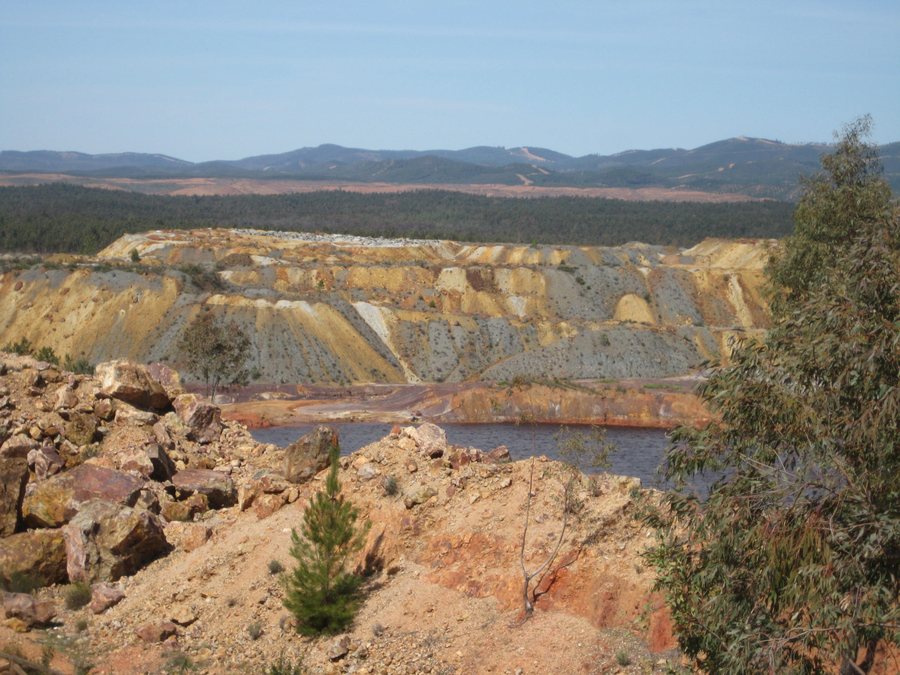
The preserved winding installation thus points to the technical side of former mining activities. At the same time, it forms part of a landscape in which the flooded Corta, the former facilities and the spoil heaps are visible alongside one another. The San Telmo miners’ settlement completes this picture with the place that was connected to the mine’s operation.
Routes through the Mining Area
The “Ruta de la Mina de San Telmo” includes the Corta Santa Bárbara. Its features also include winding towers and spoil heaps. The San Telmo miners’ settlement is also one of the elements of this route.
A signposted circular route of slightly more than 2 km runs along the Corta de Santa Bárbara. The signposted path near San Telmo has several viewpoints. It also includes several resting areas.
On the “Ruta de la Mina de San Telmo”, hikers should follow the signs and observe the fences. They should remain on the marked route.
Festivals and Dance Traditions
The Danza de San Telmo is a ritual dance tradition from San Telmo. The Romería de San Telmo takes place in May at the locality of Palomarejo. During the romería, young people from San Telmo perform the dance of the “lanzaores”.
At the end of July, San Telmo celebrates the Velada in honour of its patron saint, San Telmo. The Velada includes a procession and workshops on traditional games. These games include “captura de gallo”.
The sculpture “Escultura de San Telmo” is located in the Plaza “El Minero”. It was unveiled on the occasion of the 50th anniversary of the first Romería dedicated to him.
The festival dates mentioned distribute the traditional customs across two points in the annual cycle: the Romería is assigned to May, while the Velada takes place at the end of July. The Romería includes the dance of the “lanzaores”, while the Velada comprises a procession and traditional games.
Crafts and Chapel
In the municipality of Cortegana, traditional ceramics are decorated with white talc. This white talc comes from the mines of San Telmo.
The white talc thus creates a material connection between the mines of San Telmo and traditional ceramic craftsmanship in the municipality of Cortegana. The former venue was located on the Finca Palomarejos. A chapel was built opposite this former venue through community engagement. Construction work on the chapel was completed in 2006.
During the procession to the chapel, men accompany the saint. They dance to the sound of the tamboril.
To the overarching travel overview: Cortegana.

