
Almonte: Discover El Rocío, Doñana and Atlantic beaches
Almonte brings together the vast landscapes of Doñana, the pilgrimage destination of El Rocío and the Atlantic beaches of Matalascañas. In the town centre, the church and traditional houses shape the streetscape, while just beyond lie dunes, pine forests, wetlands and open trails. Travellers exploring the region between Huelva and Seville can use Almonte as a peaceful base for nature, beaches and Andalusian traditions.
 Marc Ryckaert / Wikimedia Commons; CC BY 2.5; Quelle: https://commons.wikimedia.org/?curid=2116798; Lizenz: https://creativecommons.org/licenses/by/2.5/
Photo: Marc Ryckaert
Marc Ryckaert / Wikimedia Commons; CC BY 2.5; Quelle: https://commons.wikimedia.org/?curid=2116798; Lizenz: https://creativecommons.org/licenses/by/2.5/
Photo: Marc Ryckaert
Travel essentials
- Almonte is in the province of Huelva, between wine-growing areas, Doñana and the Atlantic coast.
- The municipality includes the town of Almonte, El Rocío and the seaside resort of Matalascañas.
- El Rocío is a special place to visit year-round and gets very busy during major pilgrimage periods.
- Doñana encompasses varied landscapes, including pine forests, dunes, marshes and coastal areas.
- Access to natural areas is subject to rules on routes, opening times and entry, so check the latest information before setting out.
- A car makes it easier to get between the town centre, El Rocío, Matalascañas and the visitor centres.
Almonte: the church and the town’s history
In the town centre, take a stroll through the streets and squares around the parish church of the Asunción. The town’s present-day appearance was shaped by the 1755 Lisbon earthquake, and the town hall also dates back to earlier building phases. Traditional homes, small squares and routes linked to the history of the municipality and devotion to the Virgen del Rocío round out the picture.
Almonte is a lovely place for a leisurely first walk before or after an outing in nature. If you’re staying longer, you can combine your visit with regional cuisine, markets and the rural landscapes of the Condado. The atmosphere is much quieter than in the big cities, although the town takes on a noticeably different character on feast days and during processions.
El Rocío and the sanctuary
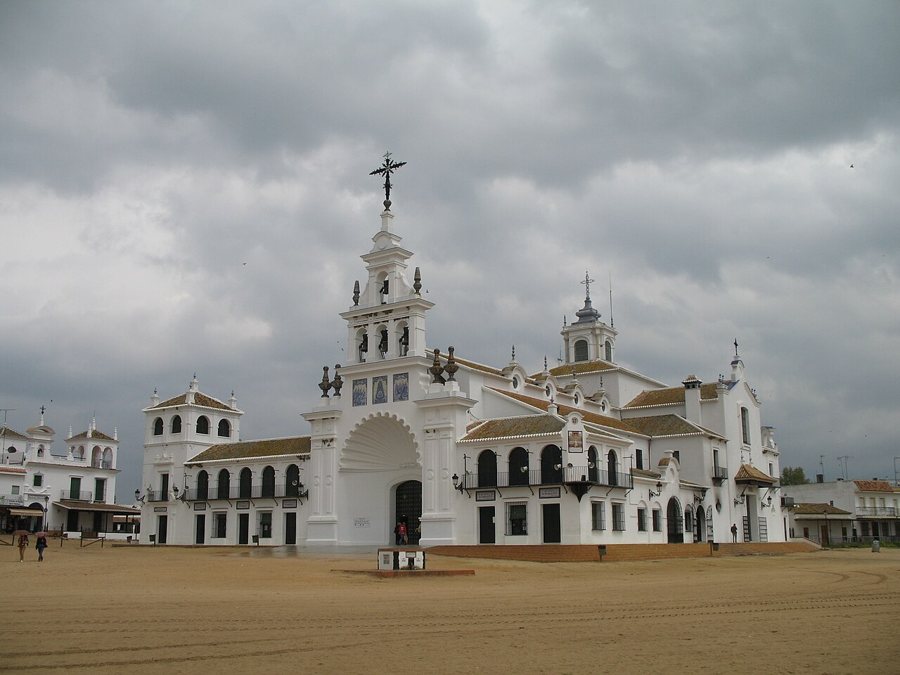
On the edge of Doñana, El Rocío feels unlike a typical Andalusian village, with its sandy streets, low-rise buildings and striking Santuario de la Virgen del Rocío. The church is the town’s landmark and a destination for pilgrims, culture enthusiasts and travellers looking to experience its distinctive landscape. El Rocío is worth visiting even outside the Romería pilgrimage.
The village is both a place where people live and an important religious gathering place. Be respectful in the church and around private property, stay on permitted routes and don’t photograph people without asking. During major pilgrimages and processions, plan your travel, parking and accommodation well in advance.
Discovering Doñana and its natural landscapes
The landscapes around Almonte have many different faces: pine forests, open marshes, lagoons, dunes and coastal stretches all form part of the Doñana natural area. Water levels, light and birdlife change with the seasons. Visitor centres and clearly marked trails are a good introduction; longer excursions should only be undertaken with suitable preparation or as part of an authorised guided tour.
Doñana is not an ordinary leisure park. Trails may close seasonally, sensitive areas are off limits, and wildlife needs to be given space. For an overview of protected areas, see National Parks and Nature Parks in Andalusia. If you’d like to explore the natural landscape on foot, find more tips in our guide to hiking in Andalusia.
Matalascañas and the Atlantic coast
Matalascañas gives Almonte its Atlantic seafront. The long sandy beach is ideal for swimming, walks and peaceful breaks outside the high season. Dunes and open coastal scenery give the resort a different character from the white villages inland. At the coast, sun protection, water and checking the wind and waves are essential.
You can combine the beaches with a day in nature or a visit to El Rocío. For practical ideas on planning a coastal break, see beach holidays in Andalusia. To discover Doñana from the other side, pair your stay with a visit to Sanlúcar de Barrameda; for a longer Atlantic coast itinerary, consider Cádiz.
Planning your trip and when to go
Allow at least two full days to explore Almonte, El Rocío and Matalascañas at a comfortable pace. An extra day gives you time for a visitor centre, a guided tour of Doñana or a longer beach walk. Spring and autumn often bring good conditions for exploring the towns and watching wildlife. In summer, the beach is more pleasant in the early morning or late afternoon; in winter, be prepared for wind and changeable weather.
A car gives you the flexibility to travel between the different parts of the municipality and nearby attractions. Check public transport schedules and connections in advance, especially for seasonal services; for general travel information, see Getting around Andalusia. Before heading into nature, check opening hours, reservations, trail closures and where parking is permitted. The Almonte Town Council tourism portal provides current information about Almonte, El Rocío and Matalascañas.
Almonte FAQ
Is Almonte worth a day trip?
Yes, if you focus on one or two highlights. A full day is enough for the town centre and El Rocío; Doñana and Matalascañas require more time.
Can you visit El Rocío outside the Romería?
Yes. The sanctuary and the village’s distinctive landscape are interesting year-round. It’s usually easier to plan a quieter visit outside the major pilgrimages.
What’s the best way to experience Doñana?
Use designated trails and visitor centres, or join an authorised guided tour. Check access, opening times and seasonal restrictions in advance.
Is Matalascañas far from Almonte?
They are both within the same municipality and easy to combine. For an accurate journey time, take traffic, the season and your specific destination into account.
What should I wear in Doñana?
Light, breathable clothing, sturdy shoes, sun protection and plenty of water are recommended. Pack an extra layer for cool or windy days.
When is Almonte busiest?
Visitor numbers rise considerably during major pilgrimages and processions, as well as on summer beach days. Book accommodation, parking and guided tours well in advance.
