
Almeria province
Hotels in Almeria province, travel accomodations in Almeria province.Vacation property in Almeria province online
Almería is an ideal base for travelers looking to experience an Andalusian port city with Moorish history and an unusually dry coastal landscape. Unlike a resort focused purely on beach holidays, the city combines an old town, harbor, urban beach, and the expansive Province of Almería. Towering above it all is the Alcazaba, whose walls bring the city’s history to life and offer sweeping views over rooftops, the harbor, and the sea.
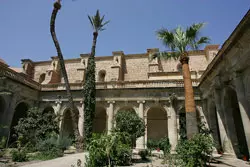 Begrünter Innenhof mit Bögen und Palmen in der Alcazaba von Almería.
Photo: (under СС for commercial work) Dominique-Sanchez/flickr.com
Begrünter Innenhof mit Bögen und Palmen in der Alcazaba von Almería.
Photo: (under СС for commercial work) Dominique-Sanchez/flickr.com
The Alcazaba is a perfect place to start a day in the city. From there, routes lead to the cathedral, Plaza Vieja, and the old town’s narrow streets. Travelers who want to explore without long walks should choose centrally located accommodation; some neighborhoods are considerably farther from the historic center or the beach. The harbor reveals Almería’s maritime side, while the promenade offers an easy change of pace from sightseeing.
For travelers planning a classic beach holiday above all, the city is more of an addition than a substitute for a beach resort. Roquetas de Mar offers more of a classic seaside-holiday feel, while Adra and Níjar offer different perspectives on the province.
The Cabo de Gata-Níjar Natural Area is one of the best reasons to visit Almería with a rental car. Volcanic formations, pale coves, and an arid landscape stand in stark contrast to the more densely developed stretches of coast farther west. When planning an excursion, allow for driving time, sun protection, water, and a return before dark. Protected natural areas call for particular care and respect: follow paths, parking rules, and the latest local guidance rather than taking impromptu shortcuts.
Travelers who want to spend more time exploring the contrasts between city, nature, and coast can combine Almería with other places in the province. A comparison with Granada and the coastal town of Motril shows how quickly the landscape and feel of a trip change in eastern Andalusia: there, the Alhambra, mountains, and Costa Tropical take center stage. Nerja and the Province of Málaga are also good destinations for comparison if you prefer a greener, more built-up coastline.
Many destinations within Almería can be reached on foot or by public transport. A rental car is much more convenient for Cabo de Gata, more remote beaches, and villages. Spring and fall are especially pleasant for visiting the Alcazaba, walking around the city, and exploring the arid landscape. In summer, plan sightseeing for the morning or evening. A holiday focused on the sea can easily combine the city and the coast if you choose your accommodation location carefully.
Yes, especially for visitors who want to combine history, harbor atmosphere, and the province’s distinctive landscape. The Alcazaba and old town give a short stay a clear focus.
Yes. Traveling by rental car offers the most flexibility. Check your route, parking options, and the latest guidance for the natural park in advance.
No. It has a beach and a promenade, but the city is best suited to combining culture and harbor life with excursions into the arid coastal landscape.
