
Sierra Morena: Dehesa, Nature and Quiet Routes
The Sierra Morena forms the northern edge of Andalusia, stretching across several provinces as a varied landscape of mountains and hills. Between Córdoba, Jaén and Huelva, dehesa pastures alternate with oak groves, stream valleys and quiet mountain roads. The area is especially suited to travelers who want to combine nature, short excursions and small towns. If you have just one day, it is best to choose a clearly defined area and allow plenty of time for breaks.
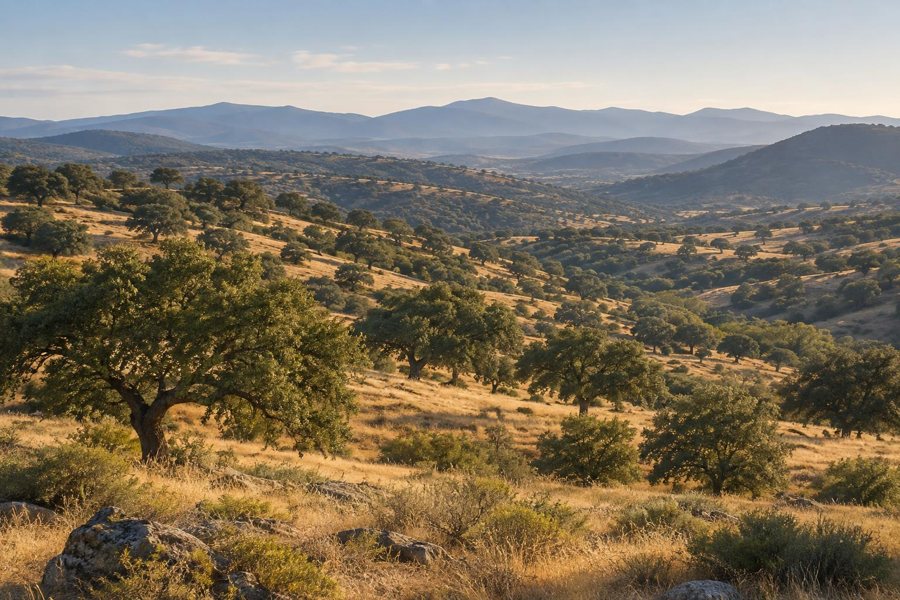 AI-generiertes Symbolbild einer weiten Dehesa-Landschaft mit Eichen und Bergen; keine konkrete Ortsaufnahme.
Photo: MaxTD / OpenAI
AI-generiertes Symbolbild einer weiten Dehesa-Landschaft mit Eichen und Bergen; keine konkrete Ortsaufnahme.
Photo: MaxTD / OpenAI
Sierra Morena at a glance
- The landscape lies north of Andalusia’s major cities and links several travel regions.
- Holm and cork oaks, dry meadows and gentle ridges define many stretches of dehesa.
- A rental car offers the greatest flexibility for reaching remote viewpoints and making short nature stops.
- Spring and autumn are generally more pleasant for walks and scenic drives than the hottest weeks of summer.
- Distances and driving times often look shorter on the map than they are on winding side roads.
- Protection rules, trail routes and access arrangements can vary by area and season.
What makes the landscape special
The Sierra Morena is not a single, clearly defined nature park. Its character comes from the changing mix of open grazing land, dense scrub, oak trees and rocky heights. Scattered villages and farmland lie in the lower areas, while higher up, broad views open across the valleys. This variety is precisely what makes the area appealing to visitors: an outing can combine a short hike, a scenic drive and a stop at a local village.
If this is your first visit, compare the different areas with the overview of landscapes in Andalusia to see which one best fits your travel plans. The National and Natural Parks overview also helps you understand which areas are protected and the different rules for visiting them.
Travel plans that work well
The Sierra Morena is easy to reach on a day trip from Córdoba or Jaén. A longer stay makes sense if you want to combine several short routes without changing your base every day. In the western part, the Sierra de Aracena can make a good base. In the east, the Sierra de Andújar is a specific nature destination worth considering.
It is better to plan two or three accessible stops than to make a long list. A scenic drive, a short walk and a village where you can take a break often make for a more relaxing day than constantly moving on. For combining nature with cultural or city trips, see the information on planning a trip to Andalusia.
Getting around by car
A rental car makes it easier to reach smaller towns and trailheads. Before setting off, check where you can refuel, opening hours and the return journey to your accommodation. On side roads, you may encounter oncoming traffic, slow-moving vehicles, tight bends and animals roaming freely. Drive cautiously and allow for longer travel times, even over short distances. The advice on driving in Andalusia will help with general preparations, while the overview of airports in Andalusia can help you choose the best arrival point.
Larger towns can be reached by bus, but without a car it may be difficult to combine visits to many remote viewpoints and trails. Before booking, check whether your chosen base is accessible by public transport.
Planning walks and days in nature
For a first visit, easy, manageable trails near your accommodation are enough. The hiking tips for Andalusia offer suggestions on equipment, route planning and how to behave on the trail. Sturdy shoes, water, sun protection and an offline map are useful even on short routes. If it is very hot, storms are forecast or wildfire risk is high, adjust or postpone your outing.
The Sierra Morena is also a wonderful place to observe nature along the way: oak trees, rocks, streams and open slopes change in appearance with the light and the seasons. Stay on permitted trails and respect barriers and signs at access points.
Respecting the landscape and wildlife
The dehesa is both a natural environment and a working cultural landscape. Close gates behind you, do not drive on unpaved private roads, and leave no litter. Observe animals from a distance; feeding them or approaching them can disturb them. Keep dogs on a leash in sensitive areas. These simple rules help preserve trails, grazing land and wildlife refuges for future visitors.
Seasons and practical preparations
In spring, the meadows often look greener, while autumn brings pleasant conditions for scenic drives and walks. In summer, it is best to set out early, take a break in the shade and keep your plans flexible. In winter, some sections may be slippery or harder to drive after rain. Before setting off, check the weather, access conditions and current information for the specific area.
Check local information
Access, protection rules and seasonal restrictions can change. The official visitor information from the Government of Andalusia provides up-to-date contacts and guidance for protected natural areas. For help choosing accommodation and planning other stops, you can also consult information about the Province of Córdoba and the Province of Jaén.
FAQs about the Sierra Morena
Is the Sierra Morena suitable for a road trip?
Yes. Choose short daily drives, allow realistic time for the return journey and focus on one clearly defined area.
Which time of year is most pleasant?
Spring and autumn are pleasant for many drives and walks. In summer, early starts and breaks in the shade are important.
Can you visit the Sierra Morena without a rental car?
Some larger towns can be reached by bus or train. However, without a car, there are fewer options for visiting remote trails and viewpoints.
Are there easy walks?
Yes, depending on the area. Choose marked or explicitly permitted trails, and check the distance and difficulty level locally before setting off.
What should you pack in your day bag?
Water, sun protection, sturdy shoes, a downloaded map and a light extra layer of clothing are good essentials.
What should you keep in mind in the dehesa?
Close gates, stay on permitted trails, keep your distance from animals and observe seasonal closures.
