
Jaen province
Hotels in Jaen province, travel accomodations in Jaen province.Vacation property in Jaen province online
Jaén combines an impressive Renaissance cathedral, a hilltop castle and an expansive olive-growing landscape. The provincial capital is therefore a good destination for travellers looking to combine culture, urban history and an excursion into the Andalusian hinterland. A full day is enough to see the main monuments; with museums, a tasting or other places in the province, an overnight stay is worthwhile.
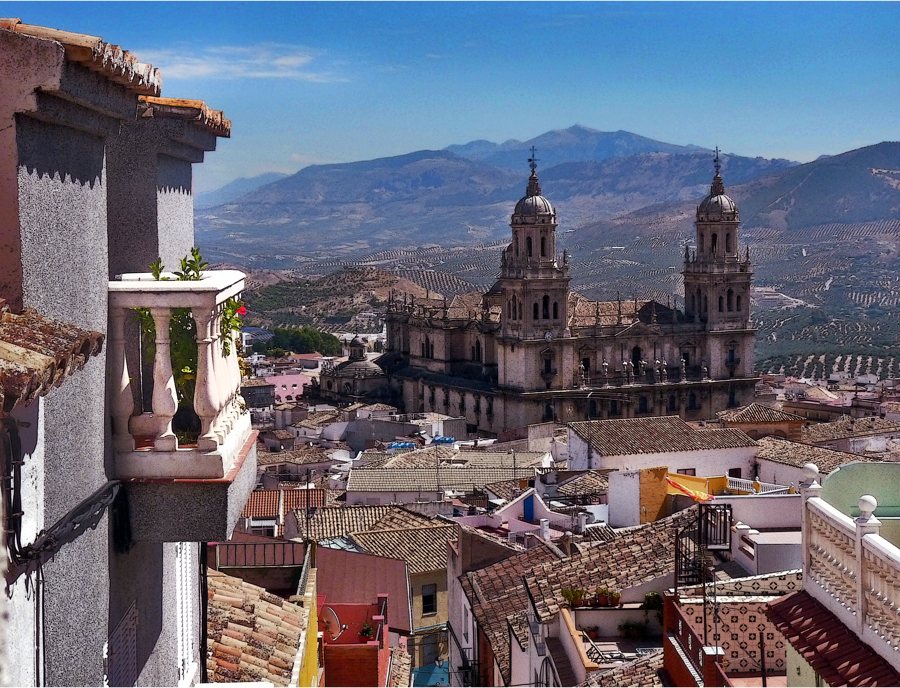 Hauptfassade der Kathedrale von Jaén. Foto: Radigonas / Wikimedia Commons, CC BY 3.0. Quelle: https://commons.wikimedia.org/?curid=13125949 – Lizenz: https://creativecommons.org/licenses/by/3.0
Photo: Radigonas
Hauptfassade der Kathedrale von Jaén. Foto: Radigonas / Wikimedia Commons, CC BY 3.0. Quelle: https://commons.wikimedia.org/?curid=13125949 – Lizenz: https://creativecommons.org/licenses/by/3.0
Photo: Radigonas
The Catedral de la Asunción is the main cultural highlight on a first walk around the city. Its grand façade, bright interior and architecture shaped by Andrés de Vandelvira make it an important example of the Spanish Renaissance. Inside, the choir, sacristy, chapter house, galleries and cathedral museum are among the areas visitors may be able to access, depending on the type of visit. Check opening times, admission fees and any restrictions due to services shortly before your visit. For an up-to-date overview of the monuments, visit the Jaén city tourism portal.
Around the cathedral, it is worth exploring more than just a few photo spots. Squares, churches and streets climbing uphill show how tightly the city is built into the slope. If you are planning to get around the centre on foot, allow for comfortable shoes and short breaks. To compare Jaén with other Renaissance towns, continue on to Baeza or Úbeda.
Santa Catalina Castle sits on the hill of the same name above Jaén. Its walls, towers and sweeping views make it a welcome contrast to the compact old town. The climb or drive up is particularly pleasant early in the day or in the late afternoon, when the light and temperatures make sightseeing more comfortable. Check the operator’s latest information before setting out for access, possible shuttle services, opening hours and admission fees.
From above, it is clear just how much the surrounding area is shaped by olive groves. The landscape helps explain why Jaén is known not only as a cultural city, but also as a centre of Andalusian olive oil. A city walk therefore pairs well with regional cuisine or an excursion to smaller towns.
Beneath the Palacio de Villardompardo lie the Baños Árabes, whose vaulted ceilings and pools offer a glimpse into the city’s Islamic past. Museums in the same complex add to the visit. The old town around Magdalena, San Ildefonso and other churches also tells the story of the different eras that have shaped Jaén. If you are interested in history, it is best to see these sights as part of a walk, allowing enough time for interpretation and to explore the interiors, rather than treating each one as a separate stop.
Local heritage also includes the legends surrounding the Lagarto de la Magdalena and places that recall more recent history. Not every venue has the same opening hours every day. For smaller museums and guided tours in particular, check current opening times, whether reservations are needed and which languages are available.
Jaén province is a good choice for travellers who want to learn more about where olive oil comes from and how it tastes. When buying olive oil, look for details about the variety, origin, harvest and quality certification. At a tasting, pay attention to aroma, fruitiness, bitterness and pungency. The guide to Andalusian olive oil provides useful background. Plan visits to mills or producers in advance, as availability, languages and opening hours can vary.
For a cultural itinerary, Jaén, Baeza and Úbeda can be combined. If you extend your route through Córdoba, you could also include Baena or Priego de Córdoba. The towns differ considerably in their cityscapes and sights, but are linked by their setting in the olive-growing inland region.
Jaén is a convenient base for trips into the province’s natural areas. The guide to nature parks and national parks in Andalusia can help you choose where to go, while hiking holidays in Andalusia covers practical questions about the season, equipment and trail conditions. For an excursion, make realistic allowances for driving time, heat, shade and the return trip to the city. In protected areas, car parks, trails and visitor areas may be subject to seasonal or weather-related restrictions.
For getting around and combining several destinations, transport in Andalusia is a useful resource. The city itself can be explored on foot from a central base. A hire car offers greater flexibility for olive routes, castles and natural attractions in the surrounding area; if you are only visiting the city, choose transport based on your accommodation and plans for the day. For destinations with different scenery, consider Guadix or Antequera.
A well-planned day is enough for the cathedral, Arab baths and Santa Catalina Castle. An overnight stay is more comfortable if you also want to visit museums, enjoy a tasting or take additional walks.
The main sights in the city can be visited without a car. A car offers much greater flexibility for olive routes, nature parks and smaller towns in the province.
A good itinerary starts with the cathedral and old town. Next, visit the Arab baths, then head to the castle later in the day to enjoy the views.
Baeza and Úbeda make a good Renaissance-themed extension to your trip. Depending on your route, you could also visit Córdoba, Guadix or other inland destinations.
Spring and autumn are often pleasant for sightseeing and excursions. In summer, take the heat into account when planning your sightseeing, shade breaks and daily schedule.
Farm shops, specialist retailers and mills may offer a range of varieties and harvest details. Check the origin, current opening hours and possible tasting times in advance.
