
Doñana National Park: Nature, Access and Trip Planning
The Doñana National Park is one of Andalusia’s most important natural destinations. Between the Costa de la Luz and the lower Guadalquivir, marshes, lagoons, dunes and open woodlands lie close together. The park is a good fit for travelers looking to combine birdwatching, landscapes and peaceful excursions. Since the area is sensitive and not all of it is freely accessible, it’s best to plan your visit before setting out.
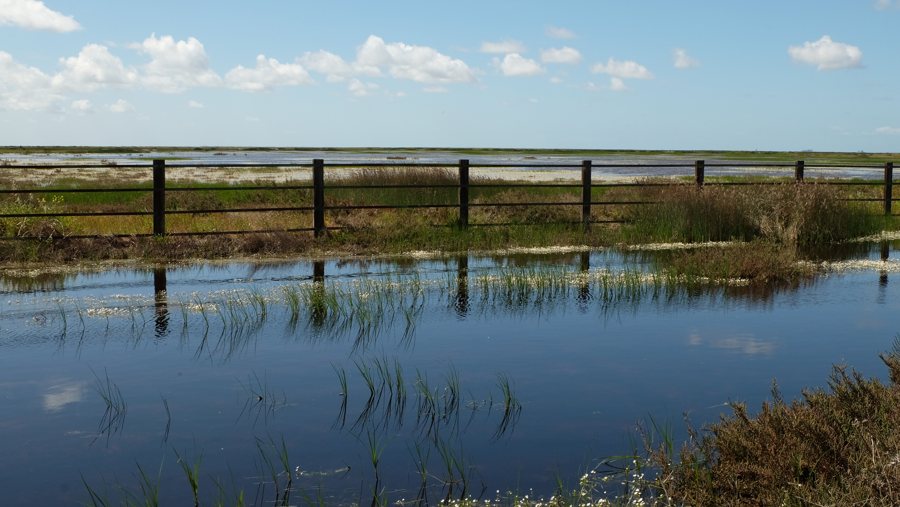 Feuchtgebiete im Coto Doñana nach Frühlingsregen. Foto: Birding In Spain / Wikimedia Commons, CC BY-SA 4.0.
Photo: Birding In Spain
Feuchtgebiete im Coto Doñana nach Frühlingsregen. Foto: Birding In Spain / Wikimedia Commons, CC BY-SA 4.0.
Photo: Birding In Spain
Doñana National Park at a glance
- The landscape includes wetlands, lagoons, dunes, beaches and woodlands.
- Water levels and the time of year can significantly change the appearance of the marshes.
- Some parts of the protected area are subject to special access and conservation rules.
- Early hours are often the most pleasant for wildlife watching, light and temperatures.
- El Rocío, Almonte and the coastal towns are possible starting points for different kinds of visits.
- A guided tour can provide access to areas that cannot be reached independently.
- Doñana can be combined with the Costa de la Luz or the landscapes along the Guadalquivir.
Where is Doñana, and which base is right for you?
Doñana is in western Andalusia, between the provinces of Huelva, Seville and Cádiz. The best base depends on whether wildlife watching, the beach or a road trip is your main priority. Almonte and El Rocío are well placed for visitor centers and excursions into the northern areas. From Huelva, you can combine nature spots with the Atlantic coast, while Ayamonte works better as a stop on the western coast.
Matalascañas and other coastal towns can also be convenient if you want to combine a visit to the natural area with days at the beach. What matters is not just the distance on the map, but the specific access points to the protected area. Before booking, check the visitor center, tour, opening hours and route together.
Wetlands, dunes and wildlife watching
The wetlands are a major reason many people visit Doñana. Depending on water levels, you may see open water, reed beds, shallow lagoons or dry marshes. In spring, flooded areas can be particularly impressive; in the dry summer months, the landscape looks much more expansive and barren.
The coastal dunes provide a striking contrast with the marshes. Many animal species live in the woodlands and open areas, but sightings are never guaranteed. Keeping quiet, maintaining your distance and bringing binoculars are more helpful than approaching wildlife. If you’re photographing birds, stay on the paths and don’t block them.
Planning your visit: centers, trails and tours
Knowing where access is permitted matters more than picking an arbitrary point on the map. Some areas can be reached via visitor centers, designated trails or public facilities. Others are accessible only as part of authorized tours. An organized tour is especially useful if you have little time or are primarily interested in wildlife.
For official information on facilities, trails and current visitor options, the Junta de Andalucía’s Ventana del Visitante is the authoritative source. Opening hours, access routes and services may change, so check the information again shortly before your trip.
Seasons, weather and what to bring
Spring and autumn often offer pleasant conditions for walking and wildlife watching. In winter, water levels and migratory birds can make the landscape particularly interesting, while rain may affect some trails. In summer, heat, strong sun and dry conditions are important factors to consider when planning.
Water, sun protection, sturdy footwear and a charged phone should be part of your day pack. Binoculars are useful for longer walks. Fires, loud music and feeding wildlife are prohibited. Stay on permitted paths, take your rubbish with you and respect closures, even if a detour seems shorter on the map.
Combining Doñana with the coast and the Guadalquivir
A visit can easily be combined with beaches and towns in Andalusia’s beach region. If you have several days, you can also explore the landscape along the Guadalquivir as far as its mouth. For more nature destinations, see the overview of national and natural parks in Andalusia, Sierra de Grazalema or Los Alcornocales.
Try not to squeeze too many stops into a single day on a road trip. If you really want to experience nature, it’s better to set aside a whole morning or stay overnight nearby. Information on airports in Andalusia and getting around Andalusia can help you plan your journey. For longer distances, a rental car is often more flexible than relying on a tight sequence of connections.
FAQ about Doñana National Park
Can you visit Doñana independently?
Some areas and facilities are open to the public, while others are subject to special rules or can only be accessed on authorized tours. Check the latest access information before you travel.
When is the best time for birdwatching?
It depends on water levels, migration periods and the weather. Early in the day, the light and temperatures are often more pleasant; binoculars and keeping your distance make it easier to observe birds without disturbing them.
Can you visit Doñana as a day trip from the Costa de la Luz?
Yes, if your coastal base and the access point work well together. Staying overnight nearby, however, gives you more time and reduces the pressure of changing opening hours or tour schedules.
What clothing and equipment are recommended?
Lightweight clothing suited to the weather, sturdy footwear, water, sun protection and binoculars are good essentials. In winter, bring rain gear as well.
Can you visit Doñana with children?
Yes. Visitor centers and short, designated trails are especially suitable for families. Choose a route that matches the children’s stamina, and make sure you have shade and drinking water.
How much time should you allow?
Half a day is a good starting point for visiting one access area. If you want to see different landscapes, take a tour and include the coast, it’s better to plan a full day or stay overnight in the area.

